

Kpop In Space:
Hello, Married To The Music readers! If you’re a longtime viewer, you’ll know that I’m not the foremost authority on science and math, but I am in fact a college student who had to take astronomy to fulfill her gen. ed requirement. So I figured that there’s probably someone else out there who isn’t the greatest at STEM subjects and could use some extra information. And if it’s conveyed through kpop, well, all the better. Enjoy!
Part I: The Moon
“Strawberry Moon” by IU

- It’s not actually pink, it’s more of a sunset orange, but it can look reddish depending on the light
- Named by the Ojibwe and Lakota tribes of North America because it appears just at the start of Strawberry Season
- Happens every year and always occurs in June; it’s usually the first moon of summer
“1/6” by Sunmi

(TW: eating disorders, nothing graphic)
- Uses the “dark side of the moon” as a metaphor for bipolar disorder and her E.D.
- ⅙ = refers to the moon’s gravity relative to the earth
- If you weigh about 100 pounds on Earth (like me), you’ll weigh about 17 pounds on the moon
- Sunmi asks, “if I weigh one sixth of what I weigh now, will my worries also be one sixth as heavy?”
“Luna” by ONEUS
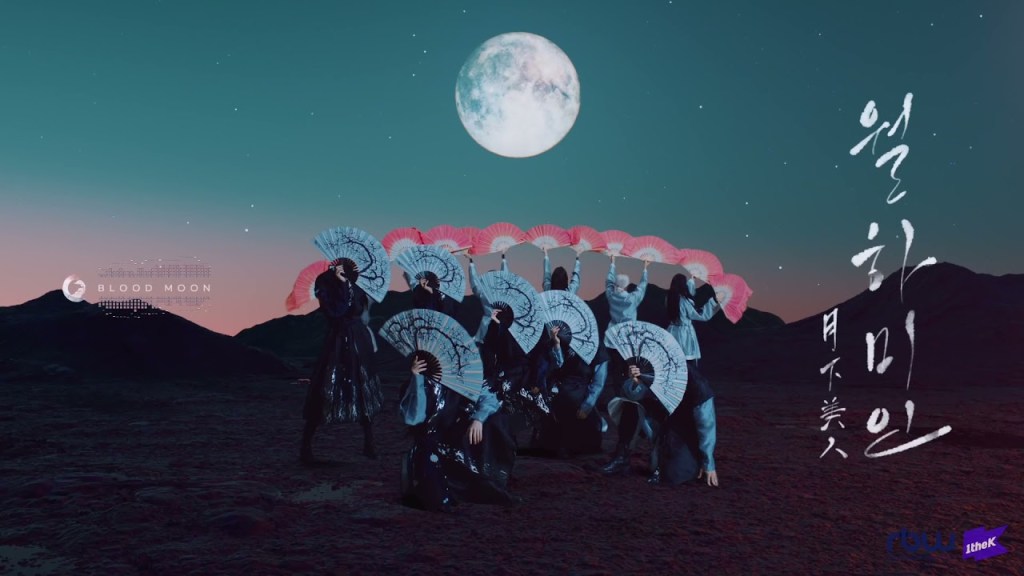
- Around the world, people celebrate holidays associated with the moon, from the Mid-Autumn Festival across east Asia to Jewish holidays like Yom Kippur whose dates are based on the moon
- “Daeboreum” is a Korean holiday celebrating the first full moon of the year
- Traditions include nut cracking, climbing mountains, and drinking cold wine
“Memory Of The Moon” by ASTRO
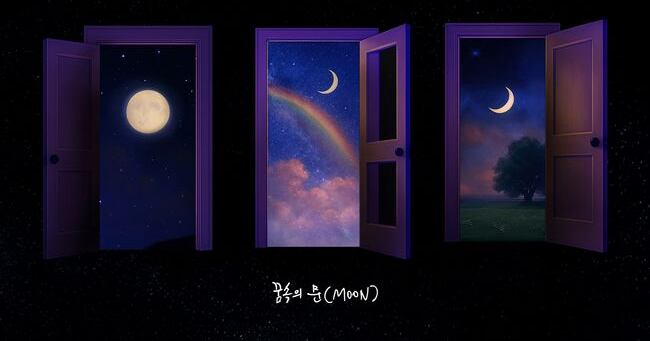
- More theoretical; delves into the moon’s connection to dreams
- Made for ASTRO’s Moon Bin, who died in 2023, by his friends, bandmates, and his sister Moon Sua
- Describes phases of life like moon phases, which are, in order:
- New Moon, Waxing Crescent, First Quarter, Waxing Gibbous, Full Moon, Waning Gibbous, Last Quarter, Waning Crescent, and New Moon once again
Part II: Stars / Planets
“Venus” by SHINHWA

- 2nd planet from the sun; sometimes called “Earth’s twin” due to its similar gravity and size
- Its gravity is 90% of Earth; if you weigh about 100 pounds on Earth (like me), you’ll weigh about 90 pounds on Venus
- Named for the goddess of love in Roman mythology, because of how bright it is in the night sky
- The only planet in our solar system named for a woman
- Has an atmosphere of mainly CO2 and sulfur clouds
“Polaris” by Dreamcatcher

- Better known as the North Star
- Used for navigation for thousands of years since its discovery in Ancient Greece
- Guided slaves to freedom and explorers across the ocean
- One point of the constellation Ursa Minor (or the “Little Dipper”) alongside Kochab, Pherkad, and Yildun.
“Winter Hexagon” by GOT7

Note: the album is called “Winter Heptagon” because Got7 has seven members, but the actual name for this is “Winter Hexagon”
- The Winter Hexagon is an asterism in roughly the shape of a hexagon, and is so called because it’s most visible in winter
- Covers almost 1/3 of the visible sky
- Though it’s called a hexagon, there’s seven stars: Capella, Castor, Pollux, Procyon, Sirius, Rigel, and Aldebaran
- In 2025, Jupiter appears to be inside of the Hexagon from Earth
“Hades / Pluto” by VIXX

Note: this is (kind of) cheating because the name of this release is Hades, like the greek god, not Pluto, like the planet, but sue me, I was running out of songs.
- Pluto was discovered in 1930 by an American astronomer and declared the ninth planet
- Named for the Roman God of the underworld, because it’s so far away and was unknown for so long
- It was later reclassified as a dwarf planet in 2006 because if it was kept a planet then several other bodies would be considered as planets too
“Mars” by Taemin

- The fourth planet from the sun, around half the size of Earth, but it’s actually further from Earth than the sun is
- Named for the Roman God of war, Mars, because of how rich and red it is due to the amount of rust that covers its surface
- Has two very small moons, Phobos and Demos, which are possibly small asteroids
“Regulus” by ONEWE

- One of the brightest stars in the night sky
- Is actually two stars, a blue main sequence star and a much smaller white dwarf that orbit each other
- In the constellation Leo; can be found by the Big Dipper
- Leo (the lion) is so named because it’s part of a Greek Myth about the Labors Of Hercules and him slaying The Nemean Lion

Let me know your thoughts!